Mana is one of the most famous villages in India, located in the Himalayan region of Uttarakhand near Badrinath. Known as the “Last Indian Village” near the India–Tibet border, Mana attracts thousands of tourists, pilgrims, trekkers, and nature lovers every year. Surrounded by snow-covered mountains, rivers, and breathtaking landscapes, the village is famous for its spiritual importance, traditional Himalayan culture, and scenic beauty.
Situated at a high altitude in the Chamoli district, Mana offers visitors a unique experience where mythology, spirituality, adventure, and mountain life come together in a peaceful environment.
Historical and mythological importance
Mana holds great importance in Hindu mythology and ancient Indian traditions. According to religious beliefs, the village is closely connected with the Mahabharata and the final journey of the Pandavas toward heaven.
One of the most famous places in the village is:
Bheem Pul
It is believed that Bhima, one of the Pandava brothers, placed a massive stone bridge over the Saraswati River to help Draupadi cross during their journey toward heaven.
Another important site is:
Vyas Gufa
According to mythology, Maharishi Ved Vyasa composed the Mahabharata here while Lord Ganesha wrote it down.
The village is also connected with:
Ganesh Gufa
which is another sacred cave associated with ancient Hindu legends.
Because of these mythological connections, Mana is considered spiritually significant by pilgrims visiting Badrinath.
Location and geographical beauty
Mana is located around 3 kilometers from:
Badrinath Temple
The village lies close to the Indo-Tibetan border and is surrounded by the majestic Himalayan mountain ranges.
The natural surroundings include:
- Snow-covered peaks
- Rocky valleys
- Fast-flowing rivers
- Waterfalls
- Glaciers
- Alpine vegetation
The Saraswati River flowing near the village adds to its dramatic beauty. The cold mountain climate and peaceful environment make Mana one of the most scenic destinations in Uttarakhand.
Climate and best time to visit
The climate in Mana remains cold for most of the year because of its high-altitude Himalayan location.
Summer season (May to June)
- Pleasant weather
- Best for tourism and sightseeing
- Clear mountain views
Monsoon season (July to September)
- Heavy rainfall in surrounding areas
- Risk of landslides on mountain roads
Winter season (October to April)
- Heavy snowfall
- Extremely cold temperatures
- Village becomes partially inaccessible during severe winter conditions
The best time to visit Mana is usually between May and October.
Lifestyle and local culture
Life in Mana reflects traditional Himalayan culture and mountain living. The local population mainly belongs to communities with deep cultural ties to the region’s history and trade routes.
People traditionally depended on:
- Wool trade
- Animal husbandry
- Farming in limited mountain land
- Pilgrimage-related tourism
Even today, many villagers maintain traditional lifestyles and wear warm woolen clothing suited for harsh mountain weather.
The houses in Mana are designed to survive cold climatic conditions and are often built using stone and wood. Local residents are known for their hospitality and simple mountain lifestyle.
During winter, many families temporarily move to lower-altitude regions because of heavy snowfall and extreme cold.
Tourism and visitor experience
Tourism is one of the biggest reasons why Mana has become famous across India.
Visitors come here for:
- Spiritual tourism
- Himalayan landscapes
- Photography
- Trekking
- Mythological sites
- Peaceful mountain experience
The village attracts:
- Pilgrims visiting Badrinath
- Adventure travelers
- Nature lovers
- Backpackers
- Road trip enthusiasts
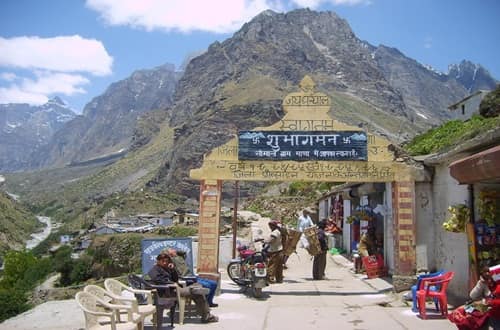
The famous “Last Indian Village” signboard is a major photo attraction for tourists.
Major attractions in Mana Village
Bheem Pul
A natural stone bridge associated with Mahabharata legends and one of the most visited places in the village.
Vyas Gufa
An ancient cave linked to Maharishi Ved Vyasa and the composition of the Mahabharata.
Ganesh Gufa
A sacred cave associated with Lord Ganesha.
Saraswati River origin area
The powerful flow of the Saraswati River near the village is considered spiritually important and visually spectacular.
Mountain viewpoints
The surrounding Himalayan landscapes provide incredible panoramic views for photography and sightseeing.
Food and local cuisine
Food in Mana mainly reflects simple Himalayan and North Indian cuisine.
Popular local foods include:
- Rajma chawal
- Parathas
- Maggi and tea for travelers
- Traditional Garhwali dishes
- Warm soups and snacks during cold weather
Small tea stalls and local cafés serve tourists visiting the village and nearby attractions.
Hot tea while enjoying cold mountain weather is one of the most memorable experiences for many visitors.
Connectivity and transportation
Mana is accessible through road connectivity from Badrinath.
Travel options include:
- Shared taxis
- Private cars
- Tourist buses
- Local transport from Badrinath
The nearest major town connections come through:
- Joshimath
- Rishikesh
- Haridwar
Mountain roads leading to Mana offer spectacular Himalayan scenery but can become difficult during heavy rain or snowfall.
The nearest railway station and airport are located far away in the plains region, so road travel remains the main transportation option.
Adventure and trekking opportunities
The area around Mana is highly popular among trekkers and adventure enthusiasts.
Popular activities include:
- Himalayan trekking
- Nature photography
- Mountain exploration
- Camping in nearby regions
Several trekking routes around Mana lead toward glaciers, mountain passes, and remote Himalayan landscapes.
The region’s natural beauty makes it a paradise for adventure travelers.
Challenges faced by the village
Despite tourism growth, Mana also faces challenges:
- Harsh winter weather
- Limited infrastructure due to mountainous terrain
- Seasonal accessibility issues
- Landslide risks during monsoon
- Environmental pressure from tourism growth
Authorities and local communities are increasingly focusing on sustainable tourism and environmental protection.
Conclusion
Mana is much more than just the “Last Indian Village.” It is a place where spirituality, mythology, Himalayan culture, and natural beauty come together in an unforgettable way.
From ancient caves and Mahabharata legends to snow-covered mountains and peaceful village life, Mana offers a truly unique experience for pilgrims, travelers, and nature lovers. Its breathtaking location near Badrinath and the Indo-Tibetan border makes it one of the most iconic and spiritually important villages in the Indian Himalayas.